
Production typed by hand
Billing re-types what the team already recorded during care.
FinTime · finance and billing
Production typed by hand, denials found too late and cost separated from revenue. FinTime turns what was performed in care into billing, accounts and results.
The problem
Billing re-types what the team already recorded during care.
The error only shows up when the claim comes back denied.
Leadership sees what was billed, but not what it cost.
The solution
Recorded production becomes the SUS files, checked against the official programs.
Forms and batches in the ANS standard, with responses and denial appeals in the system.
Nothing is billed without a person approving it; anything missing information becomes a pending item.
What is billed becomes a receivable, and what is purchased becomes a payable.
The cost of each encounter alongside the revenue.
Accrual and cash-basis results, with budget and physician payouts.
Screens
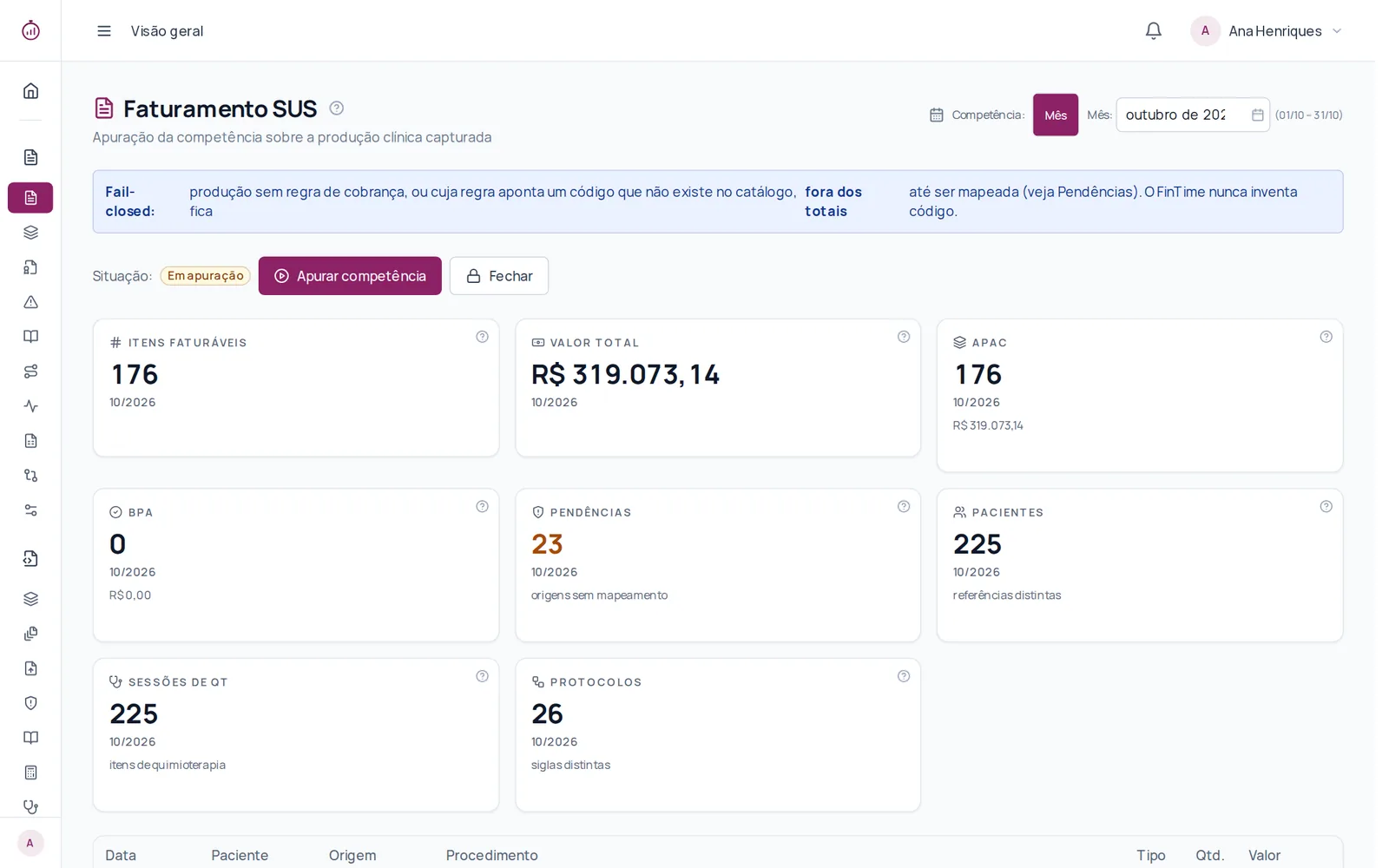
What was performed, ready to bill.
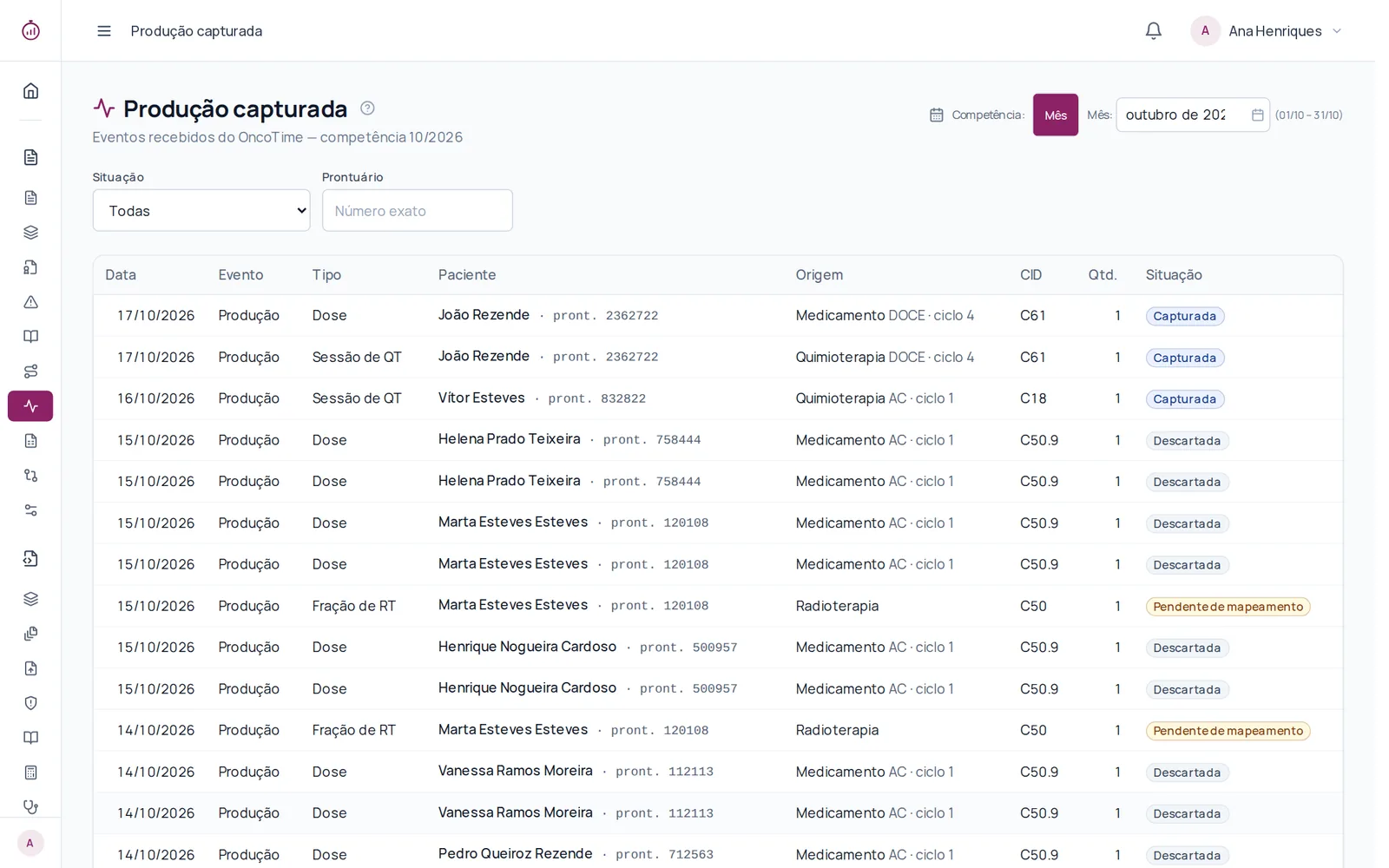
The production that came in from care.
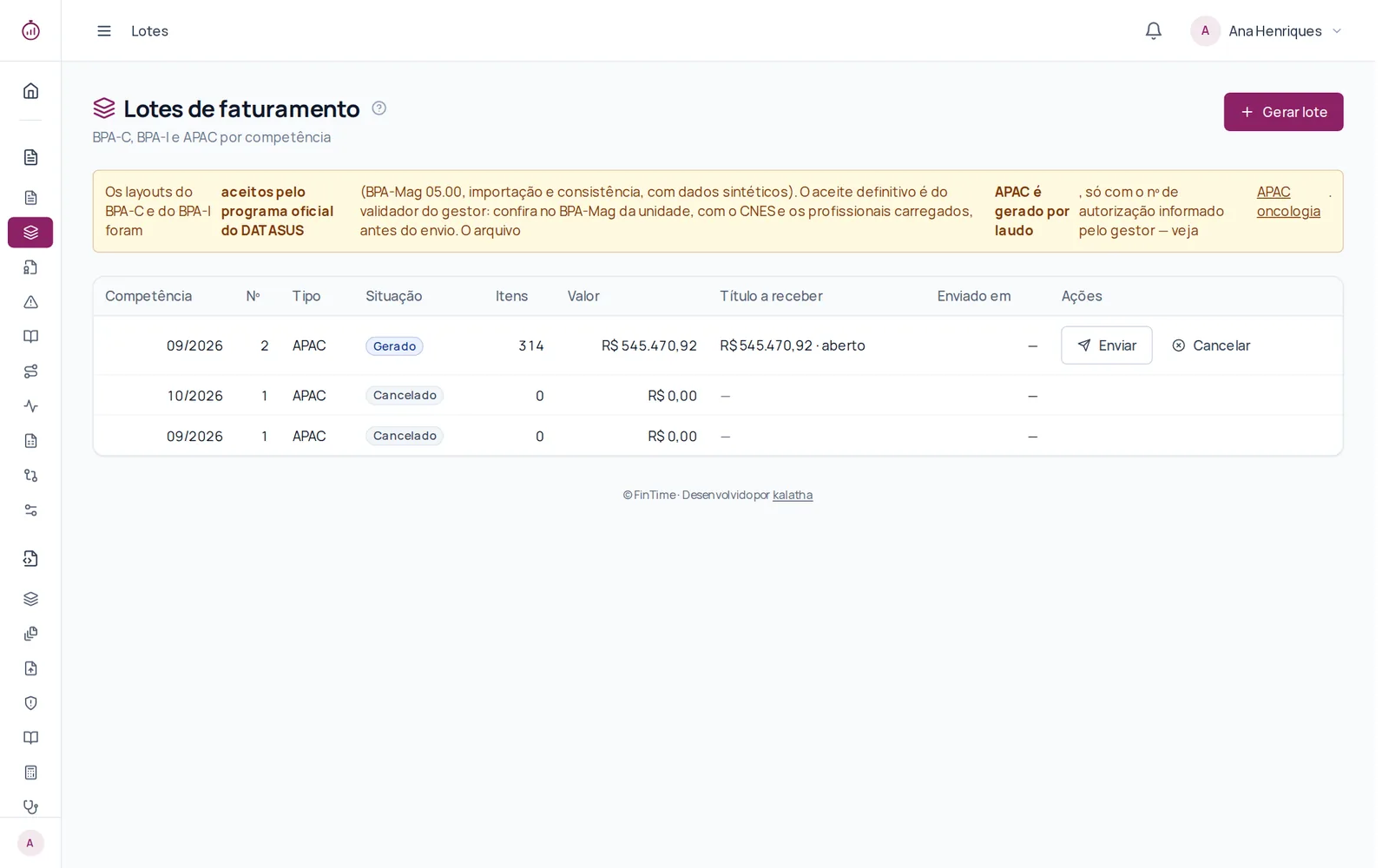
Billing batches and the response to each one.
Real screens from the demo environment · names, documents and numbers altered
In the iTime Saúde suite
FinTime receives production from OncoTime and cost from FluxTime. It also works on its own.
A guided presentation in the demo environment, with patient data masked.